
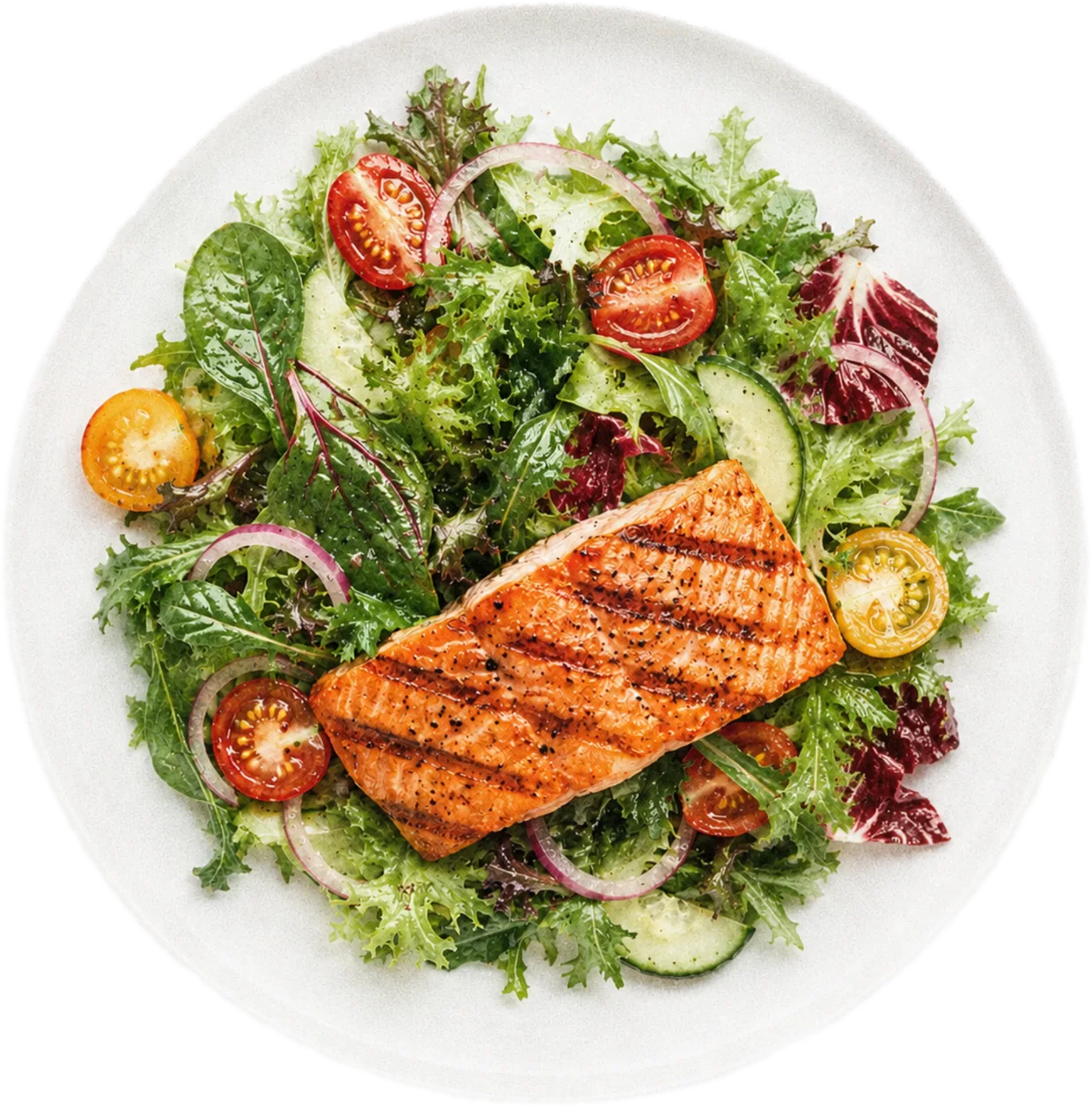
How much protein do you need to build muscle?
More than 9,000 participants, three meta-analyses, and a useful ceiling that is less certain than it sounds.
Kettle Journal
Training, nutrition and recovery — read closely, explained plainly, and linked back to the research.
More than 9,000 participants, three meta-analyses, and a useful ceiling that is less certain than it sounds.
The fitness outcome is clear. The best route there is much less settled.
The benefit peaks at a surprisingly small weekly dose.
Stay in the loop
New research, explained plainly — plus early access to Kettle for iPhone.
The archive
A 12-month randomised trial asked whether genotype or insulin secretion could predict which diet would work better.
Matched meals, an inpatient ward, and what happened when people could eat as much as they wanted.
Trials have finally separated the eating window from simply eating less.
Hypertrophy and strength do not respond to load in quite the same way.
The scale moves similarly. The tissue underneath it does not.
The eight-glasses rule has a dubious origin. The performance evidence is more interesting.
The settled findings, the premium forms, and the places where the evidence stays silent.